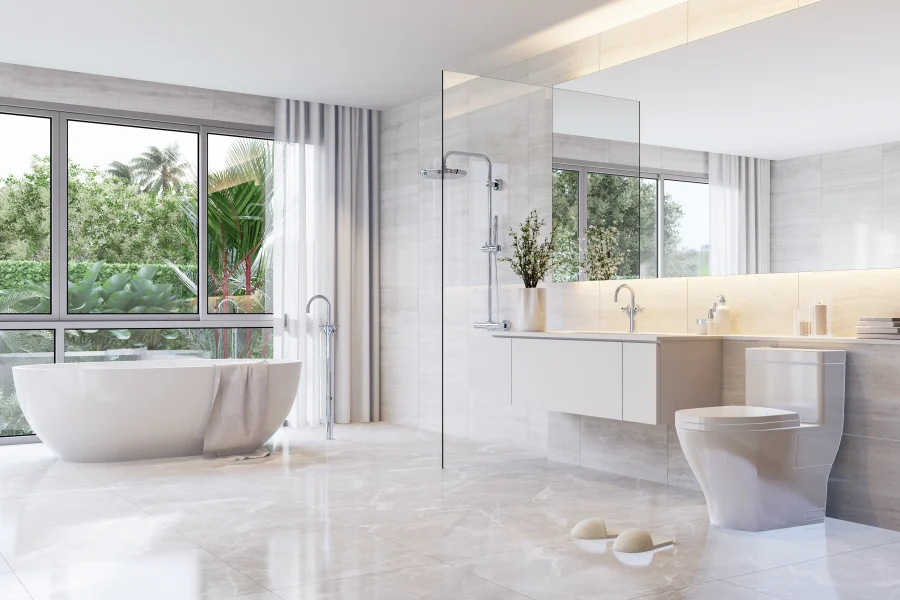
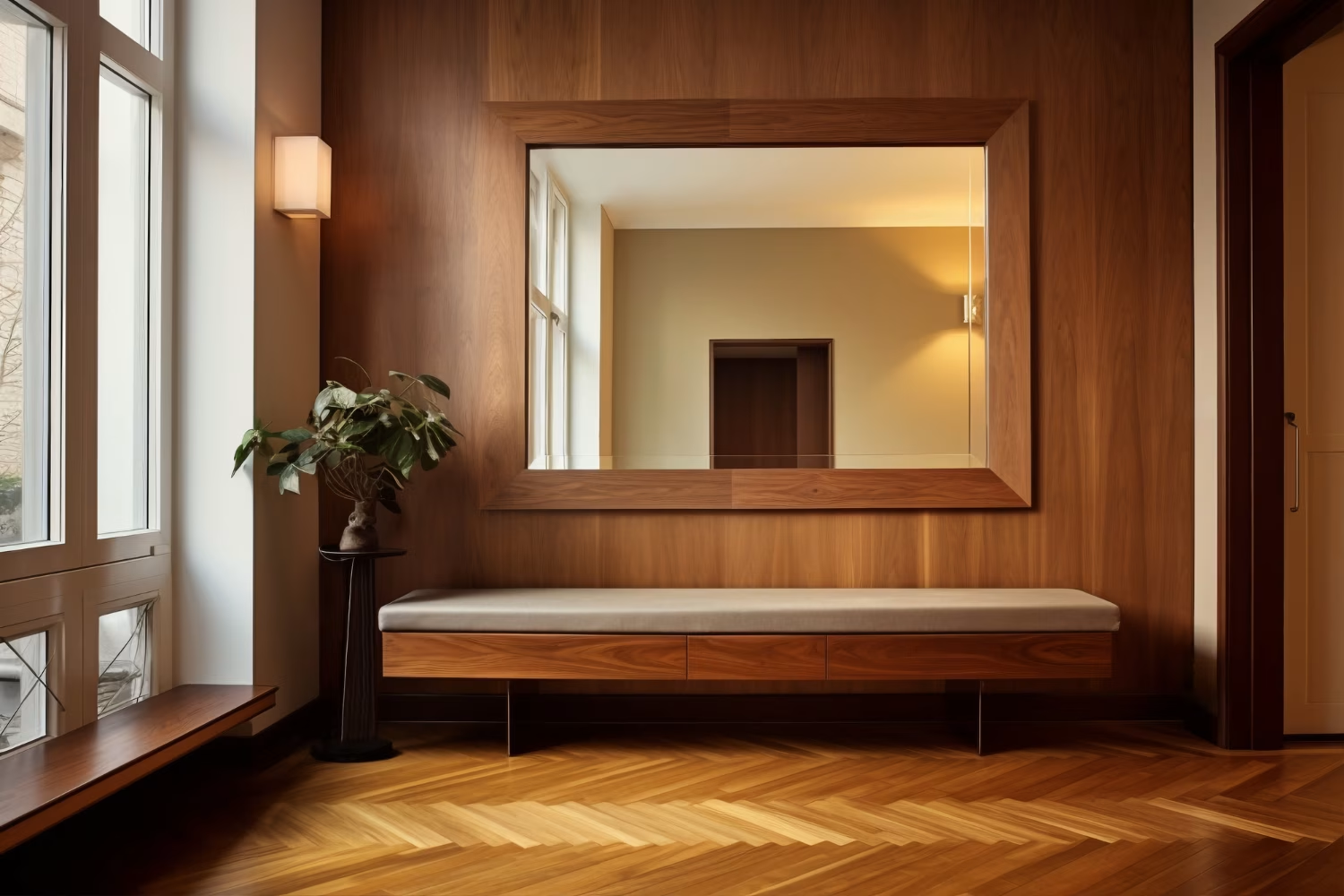
A large mirror can become one of the most prominent features in a room. Its frame, shape and proportions matter, but so does the scene inside it.
From one chair, the reflection may show a window and garden. From the doorway, it may show storage, a television or another part of the home you would prefer not to emphasise.
Before choosing the dimensions, decide what you want the mirror to bring into view.
For Toronto homeowners and businesses, a useful placement exercise starts from the positions where people normally enter, sit and move—not only from directly in front of the proposed wall.
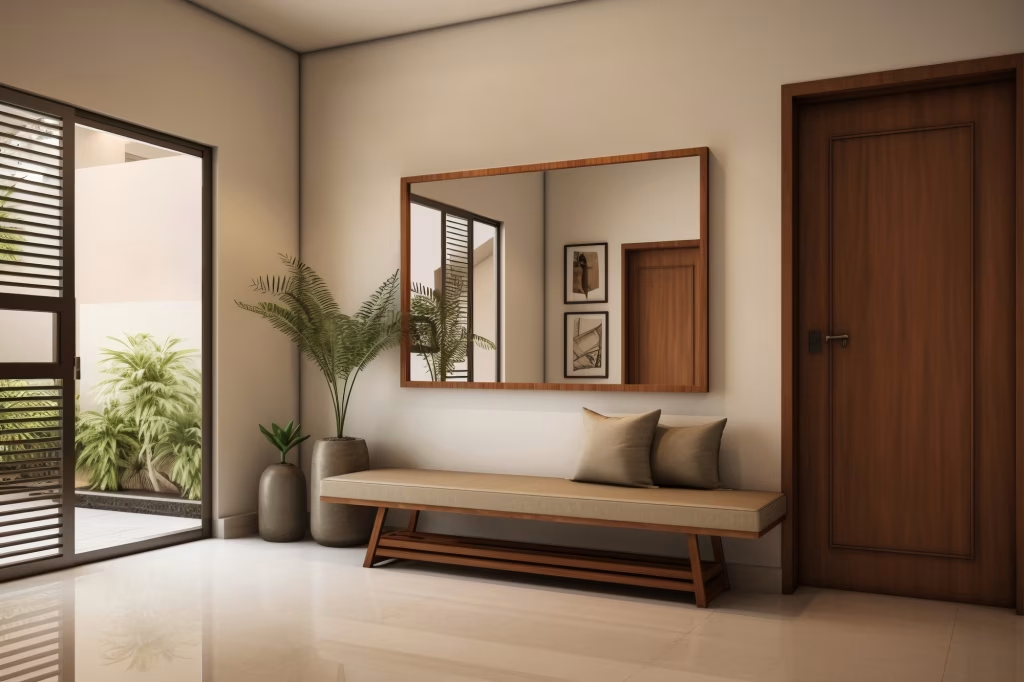
Choose the Mirror’s Main Purpose
A decorative feature and a practical full-length mirror have different priorities.
You may want somewhere to check clothing, a feature above a sideboard or a reflective surface within a reception area.
Describe the intended use before choosing the size.
Ask:
- Who will use it?
- From where will it normally be viewed?
- Does it need to provide a particular view of the person?
- Is it mainly decorative?
- What would you like it to reflect?
- What should remain less prominent?
A larger mirror does not automatically serve the purpose better. Its position and relationship with the room matter just as much.
Our custom mirrors should be planned around that combination of use, proportion and reflected view.
Start With the Main Viewing Positions
Stand or sit in the places where you will usually see the mirror.
Include:
- The room entrance.
- The main sofa or seating area.
- A dining chair.
- A desk.
- The usual position in front of the mirror.
- An adjoining hallway.
Notice what lies opposite the proposed location.
A mirror seen mainly from an angle may create a different composition from the one shown in a straight-on design drawing.
Take photographs from these positions to explain the room to the provider. The photographs help communicate the layout, but they do not reproduce the reflection of a mirror that is not yet installed.
Decide Which Views You Want to Repeat
The reflected scene becomes part of the room’s appearance.
A well-placed mirror may show a feature you enjoy. It may also repeat an area that already feels visually busy.
Compare the likely views:
| Reflected Feature | What to Consider |
|---|---|
| Window | The view outside and changing light |
| Artwork | Whether the repeated view supports the room |
| Open shelving | How it looks during ordinary use |
| Television | Whether seeing it from another angle is desirable |
| Doorway | Views into adjoining rooms |
| Dining table | The effect when the room is occupied |
| Storage area | Whether it becomes more prominent |
Use the home or business as it normally operates. A placement that only works after every visible object is removed may not suit daily life.
Review Privacy Through the Reflection
A mirror can introduce a view that is not obvious when looking directly into a space.
Check whether someone at the entrance or in an adjoining room could see a private area through the reflection.
Consider:
- Bedroom doorways.
- Dressing areas.
- Desks and screens.
- Private seating areas.
- Rooms visible when internal doors are open.
This is particularly useful in compact interiors where several spaces share sightlines.
You do not necessarily need to abandon the wall. A different size, position or furniture arrangement may change the view.
The important step is to notice the relationship before fabrication.
Test the Outline Without Mistaking It for the Reflection
A temporary outline helps you judge scale.
Where the surface allows it, use a suitable removable method to mark the proposed edges. Avoid damaging the wall finish.
Review the outline from several positions.
Ask:
- Does it feel balanced above the furniture?
- Is it too close to adjacent trim?
- Does it dominate the wall?
- Is the shape appropriate for the room?
- Is there enough space around nearby fittings?
The outline shows where the mirror will sit. It does not show exactly what it will reflect.
Use it alongside the sightline review rather than treating it as a complete preview.
Include the Frame in the Dimensions
A framed mirror has an outer size and a reflective area. Those are not interchangeable.
A substantial frame may create the visual weight you want while reducing the glass area within a fixed outline.
For an unframed mirror, edge treatment and the proposed installation appearance still need consideration.
Ask the drawing to distinguish:
- Overall dimensions.
- Reflective glass dimensions.
- Frame width, where applicable.
- Edge treatment.
- Any other visible components.
Compare finish samples beside nearby materials. A frame does not need to match every metal or timber element, but its relationship should be deliberate.
Look at Lighting During Normal Use
Review nearby lights and windows before approving placement.
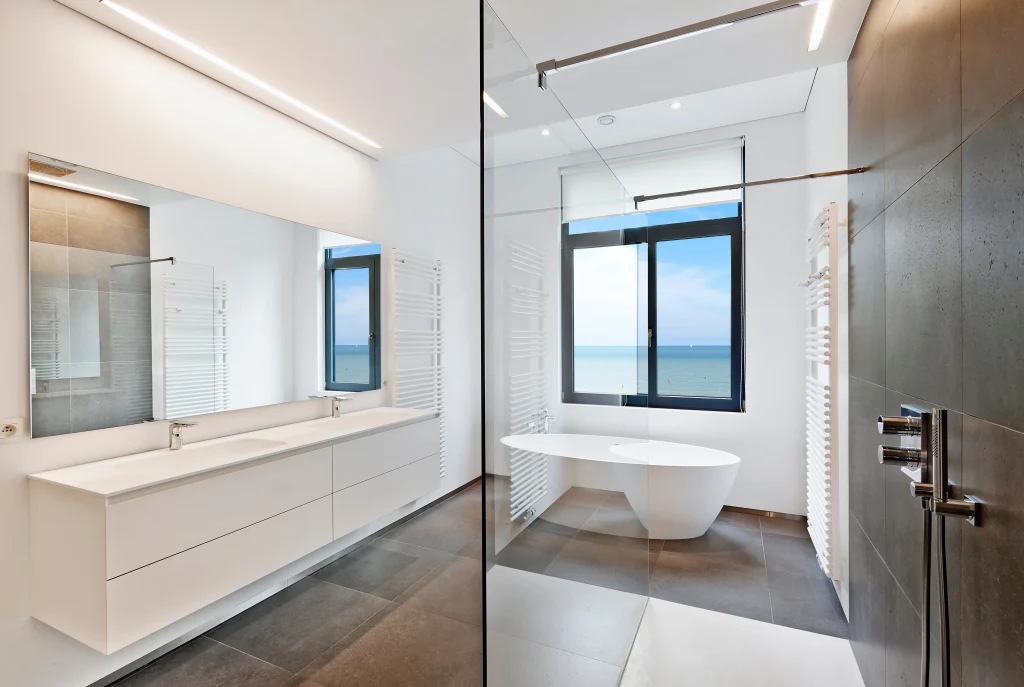
A mirror may bring a bright fitting into your line of sight from a particular seat. The effect can change between daylight and evening use.
Consider:
- Ceiling lights.
- Wall lights.
- Lamps.
- Windows.
- Screens.
- Lighting planned for a future update.
If a reflected light source is uncomfortable, discuss whether changing the mirror position or lighting arrangement would help.
Do not assume the mirror creates additional daylight. It reflects the light and scene available to it, and the useful result depends on placement.
A promise that a mirror will make every room brighter overlooks those conditions.
Coordinate Furniture Before Choosing Height
A mirror above a console, dresser or sideboard needs to be considered with the actual piece.
Confirm whether the furniture will remain and how it is used. Include lamps, artwork or other items normally placed on top.
For a full-length mirror, review the standing position and the space needed to use it comfortably.
Ask:
- Can someone stand where intended?
- Does furniture restrict the view?
- Is the mirror visible from a useful distance?
- Does a nearby door affect the arrangement?
- Will future furniture changes alter the purpose?
Avoid ordering around a temporary furniture layout if you already plan to replace it.
Assess the Wall Before Choosing the Installation
A large mirror needs an appropriate mounting arrangement for its size, specification and location.
The appearance of the wall does not confirm the supporting construction behind it.
Tell the provider about:
- Known wall construction.
- Recent repairs.
- Existing mirrors or fittings.
- Unfinished decoration.
- Outlets or other components nearby.
- Any uncertainty about concealed conditions.
Ask what must be confirmed before the installation is specified and measured.
Do not assume that a fixing method used for a smaller decorative item will suit a large mirror. Likewise, a mirror shown leaning in an inspiration image should not be treated as a suitable installation instruction.
Plan Delivery and Handling
A mirror that fits the wall still needs a practical route into the room.
Discuss entrances, stairs, lifts, corners and building access arrangements before the order is finalised.
For a condominium or commercial property, identify any relevant delivery or working arrangements with building management.
Clarify:
- Who checks the access route.
- What needs moving.
- Where the installation team will work.
- Whether an existing mirror needs removal.
- Who handles disposal.
- What surrounding repairs are included.
Do not attempt to remove or reposition large glass yourself to prepare for the appointment.
Access is part of the project, not a detail to resolve after fabrication.
Approve the Complete Mirror Arrangement
Before ordering, review one clear specification.
It should identify:
- Size and shape.
- Position.
- Frame or edge treatment.
- Relevant glass details.
- Mounting arrangement.
- Removal and disposal.
- Included finishing work.
- Access assumptions.
If the design changes, record the approved revision.
Keep the final documents and care instructions. Ask which cleaning methods are suitable for the supplied mirror and installation rather than assuming every household cleaner is appropriate.
At completion, review the position and surrounding finish against the agreed scope. Record any outstanding items clearly.
Frequently Asked Questions
Will a large mirror always make a room look bigger?
That impression depends on the room, placement and reflected view. A mirror can also repeat clutter or emphasise a busy area. Review what it will show from the main viewing positions rather than choosing by size alone.
How can I check the size before ordering a custom mirror?
A temporary outline can help you assess proportions where the wall finish permits it. Include the frame’s outer dimensions and review from several positions. Final measurement and installation suitability still need professional confirmation.
Can a large mirror go on any wall?
The wall and proposed mounting arrangement need assessment for the selected mirror. Discuss construction, existing damage, nearby fittings and access before approval. Do not assume the visible finish establishes suitability.
Choose the View as Carefully as the Mirror
The most considered placement balances useful reflection, room proportions and an appropriate installation.
Planning a large mirror for your Toronto home or business? Request a quote from Alex Glass and Railings to discuss the wall, reflected views and dimensions before fabrication.

Alex is the founder of Alex Glass & Railings, a Toronto-based company specializing in custom glass solutions for residential and commercial spaces. With a focus on modern design, precision craftsmanship, and safety, Alex leads a team dedicated to delivering high-quality glass railings, shower enclosures, mirrors, and doors. Every project is approached with attention to detail and a commitment to creating functional, visually refined results tailored to each client’s needs.