
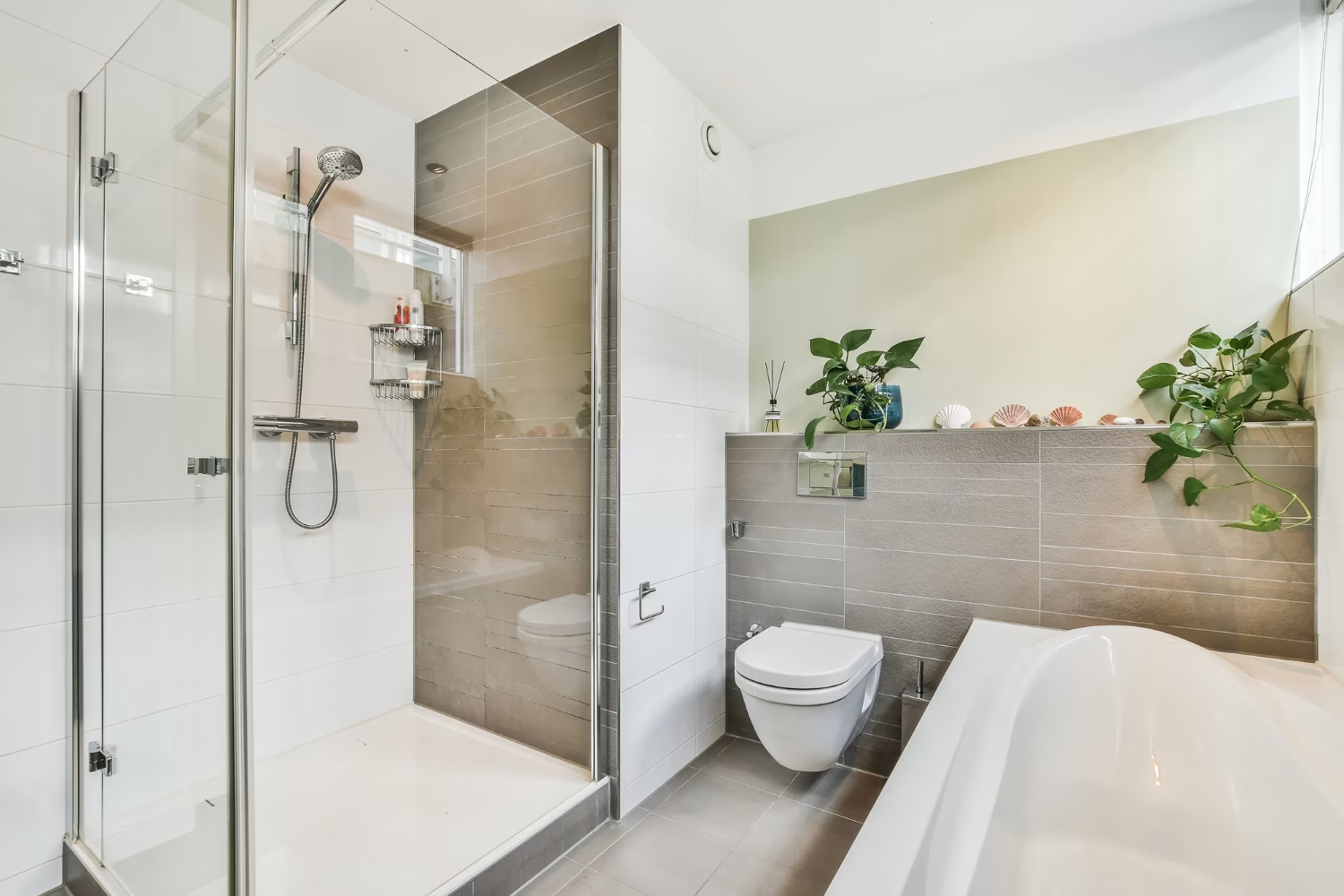
Two frameless shower quotes can describe the same bathroom and still include different enclosures.
One may use a larger fixed panel and a narrower door. Another may have a different opening position, handle or support arrangement. Removal of the existing enclosure may appear in one price and remain outside the other.
The word “frameless” does not resolve those differences.
Before comparing totals, establish what each layout provides and how it fits the finished shower. For Toronto homeowners, a clear drawing and a defined scope are more useful than a short description followed by a price.
Begin With the Drawing, Not the Total
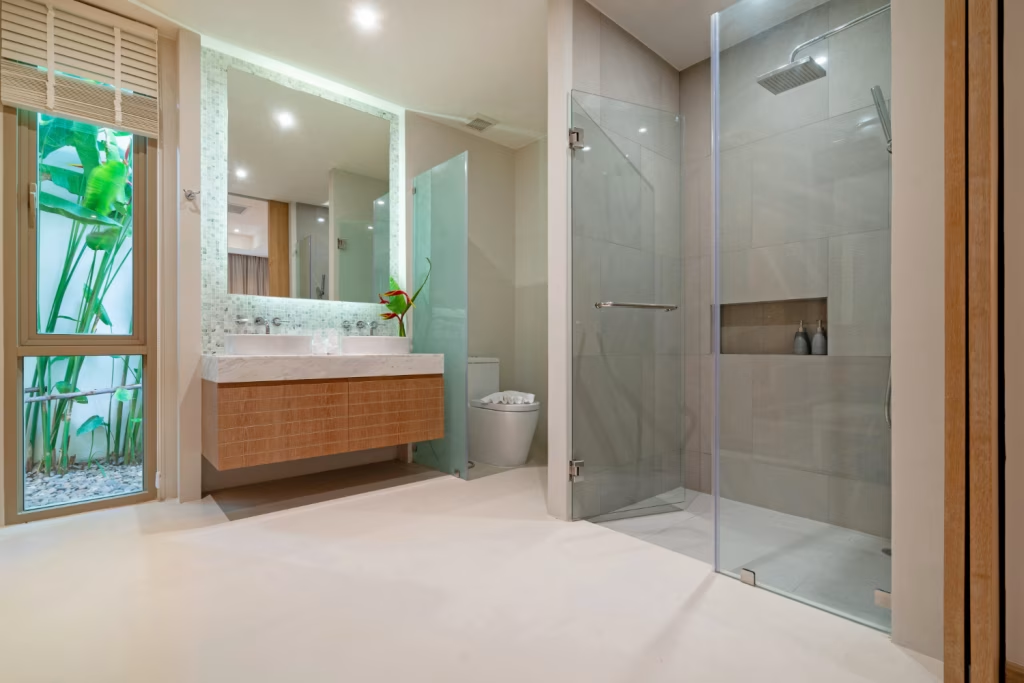
Ask for a drawing or labelled illustration showing the proposed arrangement.
It should be clear which pieces are fixed, which move and where you enter. Include the surrounding bathroom features needed to understand operation.
Look for:
- Fixed panels.
- Door position.
- Direction of movement or sliding arrangement.
- Handles.
- Relevant supports.
- The relationship with walls and the shower base.
An inspiration photograph is not a substitute for a project drawing. It may show a different opening, hardware system or panel arrangement.
Our shower glass enclosures should be quoted around the proposed installation rather than the appearance of a similar bathroom.
Count the Panels and Identify Their Roles
Panel count alone does not establish value, but it helps reveal differences between proposals.
A larger piece of fixed glass may change the door opening. An additional return panel may create a different enclosure shape. A revised arrangement may affect access to controls.
Compare each panel’s purpose:
| Panel or Component | What to Establish |
|---|---|
| Main fixed panel | Its location and relationship to the entry |
| Door | Operating arrangement and usable passage |
| Return panel | How it meets the rest of the enclosure |
| Adjacent fixed section | Its effect on access and cleaning |
| Supports | What is included in the proposed system |
Ask why a layout has been recommended.
A proposal with fewer panels is not automatically simpler to use. A proposal with more glass is not automatically more complete.
Check the Entry Against the Bathroom
The quoted door needs to work with the space outside the enclosure.
Review it with the vanity, toilet, room door and storage included. For a moving door, consider the handle as well as the glass.
Ask:
- Where will you stand to open it?
- What is the usable entry?
- Does movement approach another fixture?
- Can you reach the controls?
- Where will you retrieve a towel?
- Can nearby drawers and doors still operate?
If two quotes show different entry positions, that is a functional difference—not merely a pricing detail.
Make sure the selected arrangement supports the household’s access needs and any applicable project requirements.
Identify the Glass Specification
The quotation should make the proposed glass identifiable.
Ask what specification applies to the selected system and why it is suitable. Do not choose technical details solely from a photograph or assume that greater thickness automatically means a better enclosure.
Also distinguish the glass’s construction from appearance options.
These may include a particular tint, a lower-colour appearance or an obscured finish, depending on availability.
If you are comparing samples, ask whether they represent the exact option being quoted.
The final order should record the selection clearly. A description such as “clear glass” may not explain every appearance-related choice discussed during the visit.
List the Hardware Rather Than Assuming It Matches
Hinges, clamps, channels, rollers, guides and supports vary with the system.
Ask which components form part of the quoted arrangement. Then confirm the selected finish and whether it applies consistently across them.
Review:
- The operating hardware.
- Fixed-panel attachments.
- Support components.
- Handle or pull.
- Any included accessories.
- Visible finish.
A display may contain optional pieces or a different system. Confirm what the price actually supplies.
If a minimalist appearance is important, explain that preference before the system is approved. Necessary components should not be removed from the design simply to match a reference image.
Confirm the Handle Before Fabrication
A handle is more than a finishing choice when its selection affects the glass preparation or system.
Compare:
- Position.
- Grip.
- Projection.
- Clearance.
- Appearance.
- Practical use from both sides.
A handle that doubles as a towel location should be discussed as part of the intended product arrangement, not assumed suitable because it looks convenient.
Ask when the selection must be final.
Late changes may affect more than the hardware price. Keep the approved handle reference with the enclosure drawing.
Separate Glass Installation From Shower Repairs
A new enclosure should not be assumed to correct every problem in an existing shower.
If you are replacing glass because water escapes, explain where and when it happens. Ask what the assessment establishes about the enclosure and what may need attention elsewhere.
Clarify responsibility for:
- Existing tile damage.
- The shower base or threshold.
- Waterproofing concerns.
- Loose or unsuitable supporting areas.
- Plumbing fixtures.
- Repairs after removal.
A quotation for glass may reasonably exclude those tasks, but the boundary should be understood before ordering.
Covering an unresolved condition with a new installation does not establish that it has been repaired.
Check Removal and Disposal
If an enclosure is already present, confirm whether its removal forms part of the proposal.
Ask:
- Who removes the existing glass and hardware?
- When will that happen?
- Who disposes of the materials?
- What condition might remain at old attachment points?
- Are repairs included?
- Is further assessment needed after removal?
Do not dismantle existing glass to prepare for measurement unless the project team has defined an appropriate arrangement.
Removal can reveal information that changes the scope. Agree on how additional findings will be documented and approved.
Understand Measurement and Site Readiness
An initial estimate may use photographs and approximate dimensions. Fabrication needs the appropriate professional confirmation.
Ask which surfaces and fixtures must be complete before final measurement.
Relevant decisions may include:
- Tile.
- Threshold or curb finishes.
- Wall surfaces.
- Fixture locations.
- Nearby vanity dimensions.
- Other details affecting the opening.
Confirm who is responsible for declaring the area ready.
If construction changes after measurement, tell the glass provider before fabrication proceeds. Do not assume a small alteration is irrelevant.
Ask About Treatments and Care
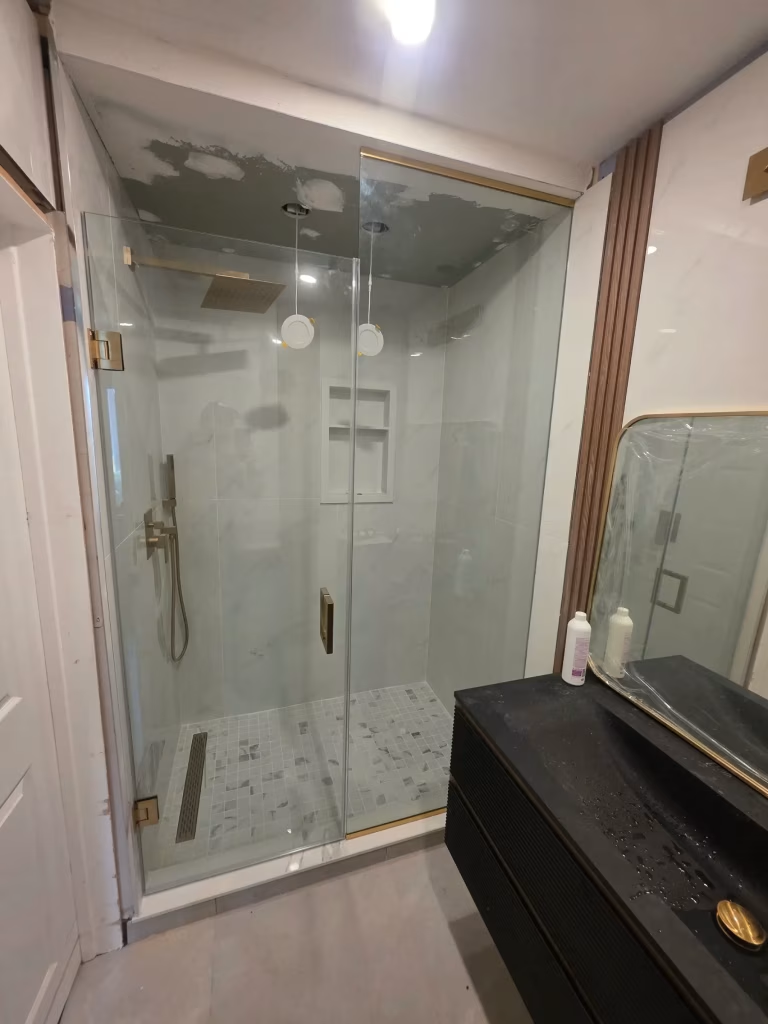
If a glass treatment is included, identify the product and its purpose.
Ask:
- Is it included in both quotes?
- Is it factory-applied or otherwise supplied?
- What care instructions apply?
- What limitations or written terms accompany it?
- Which cleaning products should be avoided?
Do not treat a protective treatment as a promise of maintenance-free glass.
The enclosure’s edges, hardware and other components still have their own care requirements. Ask for instructions relevant to the complete supplied system.
Define When the Shower Can Return to Use
Installation completion and readiness for shower use may be different milestones.
Ask for the instructions applying to the selected materials and site conditions. Confirm when normal operation and cleaning can begin.
Also clarify:
- Whether any follow-up adjustment is planned.
- How to report difficult operation.
- What to do if water escapes.
- Who handles a concern after installation.
Avoid testing the enclosure early simply because the glass is in place.
Keep the guidance with the project records so everyone using the bathroom follows the same instructions.
Compare Both Quotes on One Page
Use the same headings for each proposal.
| Comparison Point | What to Record |
|---|---|
| Layout | Panels, door position and operation |
| Glass | Specified construction and appearance |
| Hardware | Components, handle and finish |
| Preparation | Site-readiness responsibilities |
| Existing enclosure | Removal and disposal |
| Related repairs | Included work and exclusions |
| Accessories | Treatments or other supplied items |
| Completion | Care, return to use and written terms |
Mark unclear items as “needs clarification.”
Once the differences are understood, you can decide whether the extra cost buys a feature you value, additional work you need or simply a different arrangement.
Frequently Asked Questions
Do all frameless shower quotes describe the same type of enclosure?
No. Panel arrangements, door operation, glass options, hardware and installation scope can differ. Ask for a drawing and component description before comparing totals.
Does the price normally include removing my old enclosure?
That depends on the proposal. Confirm removal, disposal and any repairs at existing attachment points. Also establish how conditions revealed during removal will be assessed and priced.
Will new shower glass fix water escaping from the shower?
That depends on the source. The assessment should distinguish enclosure-related concerns from issues involving the base, tile, waterproofing or other components. Ask what the quoted installation is intended to resolve.
Compare the Enclosure Behind the Price
A useful quote makes the layout, components and responsibilities clear before the glass is fabricated.
Replacing or planning shower glass in Toronto? Request a quote from Alex Glass and Railings to review a defined enclosure arrangement for your bathroom.

Alex is the founder of Alex Glass & Railings, a Toronto-based company specializing in custom glass solutions for residential and commercial spaces. With a focus on modern design, precision craftsmanship, and safety, Alex leads a team dedicated to delivering high-quality glass railings, shower enclosures, mirrors, and doors. Every project is approached with attention to detail and a commitment to creating functional, visually refined results tailored to each client’s needs.